
House of the Scales
History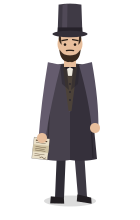
Abraham Lincoln
Malice toward none · 1809–1865
Where you meet them
Their story is still ahead in Moralia.
A Log Cabin, Then the Law
Born in a one-room log cabin in Kentucky and raised on the Indiana frontier, he had, by his own count, less than a year of schooling in all, and taught himself the rest, law included. He practiced as a lawyer in Springfield, Illinois, served one term in Congress, and came to national attention in 1858, debating Stephen Douglas over whether slavery could spread into the western territories. He lost that Senate race, then won the presidency two years later without a single Southern electoral vote. Seven Southern states declared themselves out of the Union before he took office. He led the Union through four years of civil war, issued the Emancipation Proclamation, and pressed Congress to pass the Thirteenth Amendment, which abolished slavery in the whole country.
Five Days After the Surrender
On April 14, 1865, five days after the Confederacy's main army surrendered at Appomattox, he went to a theater in Washington to see a comedy. During the third act John Wilkes Booth, an actor and Confederate sympathizer, stepped into the presidential box and shot him in the back of the head. He was carried to a house across the street and died the next morning, aged fifty-six, without regaining consciousness. He never saw the Thirteenth Amendment ratified.
"With malice toward none, with charity for all, with firmness in the right as God gives us to see the right."
Second Inaugural Address, March 4, 1865, six weeks before his death. The sentence goes on: "let us strive on to finish the work we are in."
Play today's story